
Shopping Cart
- El Perro
- Tips
- 0 likes
- 26 views
- 0 comments
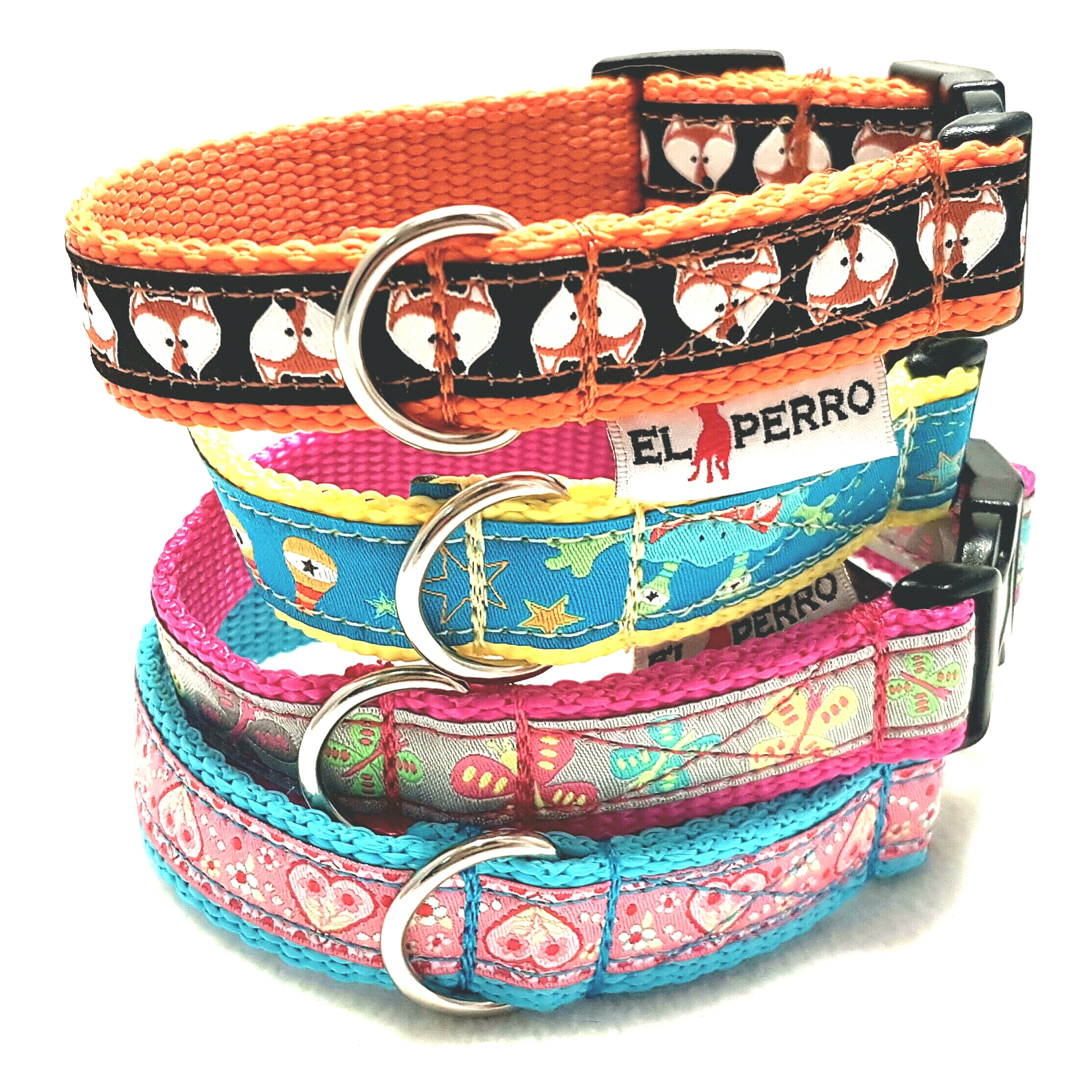
We make collars in widths from 1.5 to 5 cm. The difference is not decorative: the wider the webbing, the larger the area over which the force of a sudden pull is spread. On a dog that pulls, a narrow collar digs into the neck, while a wide one distributes the pressure.
Where to start
The starting point is your dog's weight and temperament, not size alone.
- 1.5–2 cm — small dogs, up to a few kilograms: Yorkies, Maltese, Chihuahuas, puppies of medium breeds. On a neck that size, wider webbing would be disproportionately stiff.
- 2.5–3 cm — medium dogs: Beagles, Cocker Spaniels, Border Collies, smaller crossbreeds. This is the most popular width, good for walks and for everyday wear.
- 4 cm — strong dogs that pull: Amstaffs, Staffies, Labradors, shepherds. At this width, only steel hardware really makes sense.
- 5 cm — very large and very strong dogs, and also for working with a dog on a wide collar with a handle.
When to go wider than the weight suggests
If your dog pulls, reacts sharply to other dogs, or you use the collar in dog sports, it is worth going a notch wider. The reverse happens too: a dog that is heavy but calm and walks to heel will be more comfortable in 3 cm than in 4.
Whatever the width, we match the hardware to your dog's strength — steel where durability is needed, aluminium where the weight of the collar matters. If you are not sure, drop us a line before ordering: it is easier to advise before sewing than to exchange things afterwards.
Comments (0)