Shopping Cart
- El Perro
- Tips
- 0 likes
- 53 views
- 0 comments
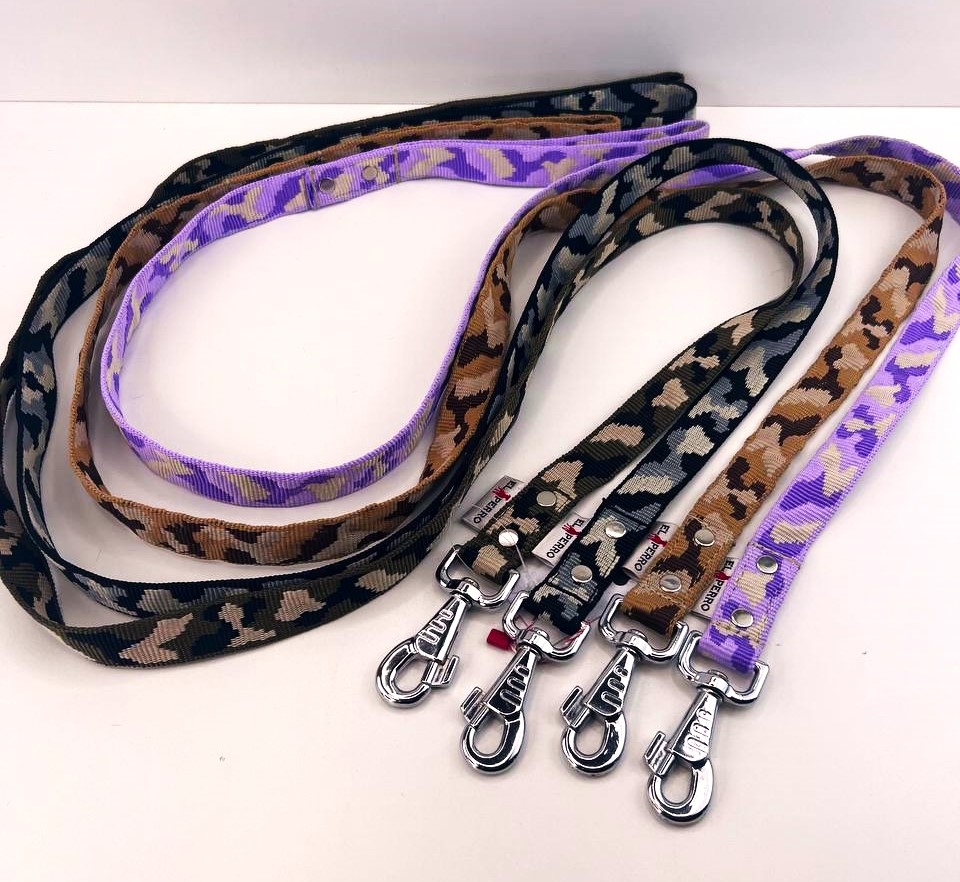
You choose a leash for the situation in which you most often walk your dog. The same leash is rarely good both in town and at training.
Town and everyday walks
Around 1.2–1.5 m is a length that gives your dog freedom and gives you control on a narrow pavement and at pedestrian crossings. Shorter can be uncomfortable; longer can be dangerous next to the road.
Meadows, woods, sniffing
This is where a longer leash comes in handy, 3–5 m, letting your dog sniff freely. An adjustable leash covers both cases: you shorten it in town and let it out in open spaces.
Two handles — when they make sense
A second handle next to the snap hook lets you quickly take your dog “in hand”: when passing another dog, getting into a lift, at the vet's. It is worth having with a strong dog, even if it normally walks calmly.
Sport and training
In canicross and dogtrekking, leashes with a shock absorber are used to soften jolts — otherwise every burst of speed from the dog goes straight into the handler's spine. For obedience training, a short leash of fixed length is better.
Rubberised and multi-position leashes
Rubberised webbing does not slip out of your hand when it is wet — after rain and by the water, that makes a real difference. A multi-position leash, in turn, lets you change the length or walk two dogs on one leash.
We make all our leashes from the same webbing and with the same hardware as our collars, so you can order them in the same colour — complete with your dog's name embroidered on them.
Comments (0)